KJ ReportsKJ Reports

The British Colonisation of Burma

12 September 20172,691

Listen to this article

KJ narrates this report in his own voice

The British Colonisation of Burma

Many people horrified by the brutality of the Burmese regime say that the ‘international community’ should intervene in the country.
But the history of Burma shows that meddling by imperial powers has always made things worse.

Many people horrified by the brutality of the Burmese regime say that the ‘international community’ should intervene in the country.

But the history of Burma shows that meddling by imperial powers has always made things worse.

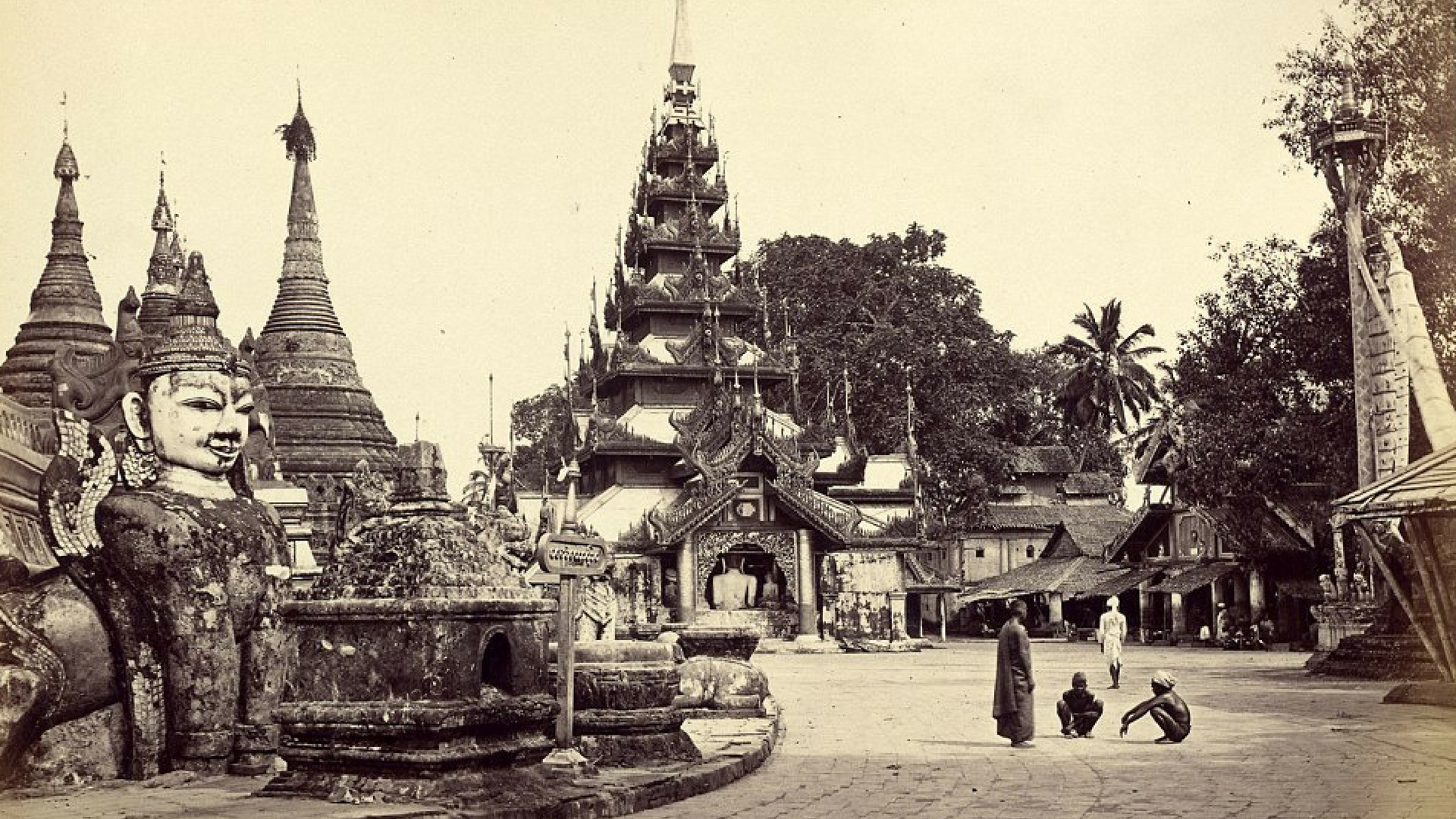
Throughout the 19th century the British steadily moved into Burma from India and by 1885 conquered the country, deposing the king and incorporating the country into India.

The invasion was marked by savagery, with troops burning down villages and suppressing dissent with mass executions.

Once in control the British ripped up Burma’s economy and environment.

In Northern Burma, the British harvested the teak wood forests that were used for ship building, furniture, and selling.

In the South, the British increased crop production in the fertile Irrawaddy Delta create more revenue.

For example, in 1855, the delta produced 162,000 ton of rice. In 1905, the number jumped to 2 million tons. The increased production and increasing prices of rice created great wealth for Britain

Additionally, the British mined the famous rubies of Burma and other minerals.

The economic impact for British ultimately became positive through harvesting teak wood, growing crops, and mining minerals.

Burmese people were becoming poor after they were forced to work on British factories and farms and leave their self-sufficient jobs and farms.

This created an economic crisis for the Burmese people which caused them to be desperate for money.

A negative environmental impact for Burma was the uncontrollable deforestation of the teak forests by the British

The mangrove forests were replaced with rice paddies, while British monopolies looted the country of oil, teak and rubies.

Over the following 20 years of British rule Burmese society disintegrated.

The British maintained control through ‘divide and rule’ tactics, setting Burma’s various national minorities against each other

Don’t forget to subscribe to our YouTube Channel

Sign up to our website and submit video suggestions:
www.kjvids.co.uk

Like our Facebook page for exclusive updates:
https://www.facebook.com/KJVids

Follow us on Instagram for our one minute vids:
https://www.instagram.com/kjvids2016

Follow us on Twitter to be informed when we post:
https://twitter.com/kjvids2016

Support our content by becoming a KJ Patreon
https://www.patreon.com/kjvids

All Rights Reserved. Contact info@kjvids.co.uk if you are interested in licensing our content, advertising or working with us in other ways.
#britain-in-burma#british-burma#british-colonial-wars#british-colonialism#british-colonisation#british-colonisation-of-burma#british-colony-burma#british-empire#british-empire-burma#british-myanmar-colonisation#burma#burma-british#burma-colonisation#burma-oppression#burma-rohingya#burma-rohingya-crisis#burma-under-british-empire#geopolitics#history#kj-vids#myanmar#myanmar-british#rohingya-burma

Related Intelligence

More articles
The Ghost of Radcliffe: Why 1947 Still Governs 21st-Century Asia
History

The Ghost of Radcliffe: Why 1947 Still Governs 21st-Century Asia

Geographic partitions are not historical events; they are active geopolitical engines. In South Asia, a hasty retirement from Empire created a structural instability that ensures permanent mobilisation and restricts the rise of two nuclear powers.

15 Mar 2026

Pax Mongolica: The Hard-Power Blueprint for Global Integration
History

Pax Mongolica: The Hard-Power Blueprint for Global Integration

Modern globalisation is often framed as a Western invention. In reality, the 13th-century Mongol Empire established the first template for a borderless economy, proving that global trade requires a single, ruthless security guarantor to function.

15 Jan 2026

The Dollar Pact: Why Bretton Woods Never Actually Ended
History

The Dollar Pact: Why Bretton Woods Never Actually Ended

The 1944 Bretton Woods agreement is often treated as a historical relic. In reality, its core architecture remains the primary engine of American hegemony, weaponising global trade through a system of structural dependency that has no peer.

15 Oct 2025

The Liquid Front: Why South Asian Security Rests on Melting Ice
South Asia

The Liquid Front: Why South Asian Security Rests on Melting Ice

As domestic pressures and climate shifts accelerate, the Indus and Brahmaputra river basins are no longer mere sources of life, but strategic assets being weaponised in a zero-sum game between nuclear powers.

1 Oct 2025

The New Feudalism: Why the Westphalian Order is Withering
History

The New Feudalism: Why the Westphalian Order is Withering

The nation-state is not dying, but it is losing its monopoly on power. As digital territories and corporate spheres of influence supersede physical borders, we are witnessing the gradual return of pre-Westphalian overlapping jurisdictions.

15 Jun 2025

The New Delhi Pivot: Why Strategic Autonomy Survives the Great Split
South Asia

The New Delhi Pivot: Why Strategic Autonomy Survives the Great Split

India is defying the binary logic of the new Cold War. By leveraging Russian energy and American technology, New Delhi is transforming its non-alignment legacy into a sophisticated multi-aligned leverage play that few in the West fully comprehend.

1 Jun 2025