Omar Mukhtar – The Lion of the Desert

29 July 20171,859

Listen to this article

KJ narrates this report in his own voice

Omar Mukhtar – The Lion of the Desert

In 1911, Italy took Libya from the Ottoman Caliphate and formed the colonies of Cyrenaica and Tripolitania

In North Africa, the leaders of the Senusiyyah, joined forces with the Ottomans and used all their strength to start up a new resistance against the French and Italian colonial invasion.

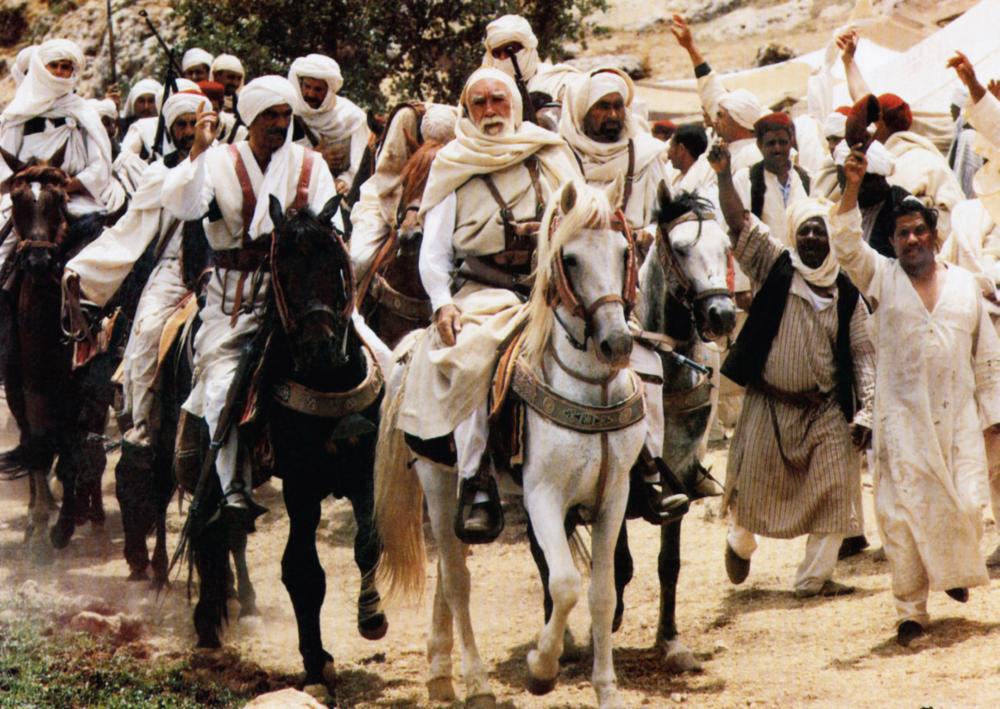
The Libyan national struggle against Italy was led by Omar Mukhtar, a Senussi Sufi teacher

Omar Mukhtar was born in eastern Cyrenaica, Al Butnan District, in the village of East Janzur east of Tobruk.

He had studied at an earlier Senussi university, in the town of Al-Jaghbub, the main Senussi redoubt, on the Libyan border with Egypt.

A teacher of the Qur’an by profession, Mukhtar was also skilled in the strategies and tactics of desert warfare.

He knew local geography well and used that knowledge to advantage in battles against the Italians,

Mukhtar repeatedly led his small, highly alert groups in successful attacks against the Italians,

Mukhtar’s men skillfully attacked outposts, ambushed troops, and cut lines of supply and communication.

The Italian army was left astonished and embarrassed by his guerrilla tactics.

Omar Mukhtar led the rebellion against Italian occupation of Libya for 20 years until his capture at the old age of 70.

Mukhtar was tried, convicted, and sentenced to be executed by hanging [by Italians] in a public place.

When the judge said: “Italy’s martial law court has decided for your execution”. In response Omar Mukhtar replied: “The ruling and decision is Allah’s alone. Your fake and fabricated ruling has no worth to it… To Allah we belong and to him we shall return”.

Rome controlled Libya as a colonial possession from 1911 until the fall of fascist Italy in 1943

Indonesian Version

https://youtu.be/TbQPg4-Vcuk

#italy-occupation#libya-occupation-italy#lion-of-the-desert#omar-mukhtar

Related Intelligence

More articles
The Ghost of Radcliffe: Why 1947 Still Governs 21st-Century Asia
History

The Ghost of Radcliffe: Why 1947 Still Governs 21st-Century Asia

Geographic partitions are not historical events; they are active geopolitical engines. In South Asia, a hasty retirement from Empire created a structural instability that ensures permanent mobilisation and restricts the rise of two nuclear powers.

15 Mar 2026

Pax Mongolica: The Hard-Power Blueprint for Global Integration
History

Pax Mongolica: The Hard-Power Blueprint for Global Integration

Modern globalisation is often framed as a Western invention. In reality, the 13th-century Mongol Empire established the first template for a borderless economy, proving that global trade requires a single, ruthless security guarantor to function.

15 Jan 2026

The Dollar Pact: Why Bretton Woods Never Actually Ended
History

The Dollar Pact: Why Bretton Woods Never Actually Ended

The 1944 Bretton Woods agreement is often treated as a historical relic. In reality, its core architecture remains the primary engine of American hegemony, weaponising global trade through a system of structural dependency that has no peer.

15 Oct 2025

The New Feudalism: Why the Westphalian Order is Withering
History

The New Feudalism: Why the Westphalian Order is Withering

The nation-state is not dying, but it is losing its monopoly on power. As digital territories and corporate spheres of influence supersede physical borders, we are witnessing the gradual return of pre-Westphalian overlapping jurisdictions.

15 Jun 2025

The Invisible Rot: Why Great Powers Implode From Within
History

The Invisible Rot: Why Great Powers Implode From Within

Conventional wisdom blames external rivals for the fall of empires. History suggests otherwise. True decline is a domestic process of institutional sclerosis, currency debasement, and the fatal decoupling of elites from national interests.

15 Feb 2025

The Suez Moment: When London Realised Might Was Not Money
History

The Suez Moment: When London Realised Might Was Not Money

In 1956, Britain’s imperial facade collapsed not through military defeat, but through a financial ambush. This structural analysis examines why the Suez Crisis remains the ultimate lesson in the fragility of debt-backed power.

15 Oct 2024