
KJ ReportsKJ Reports

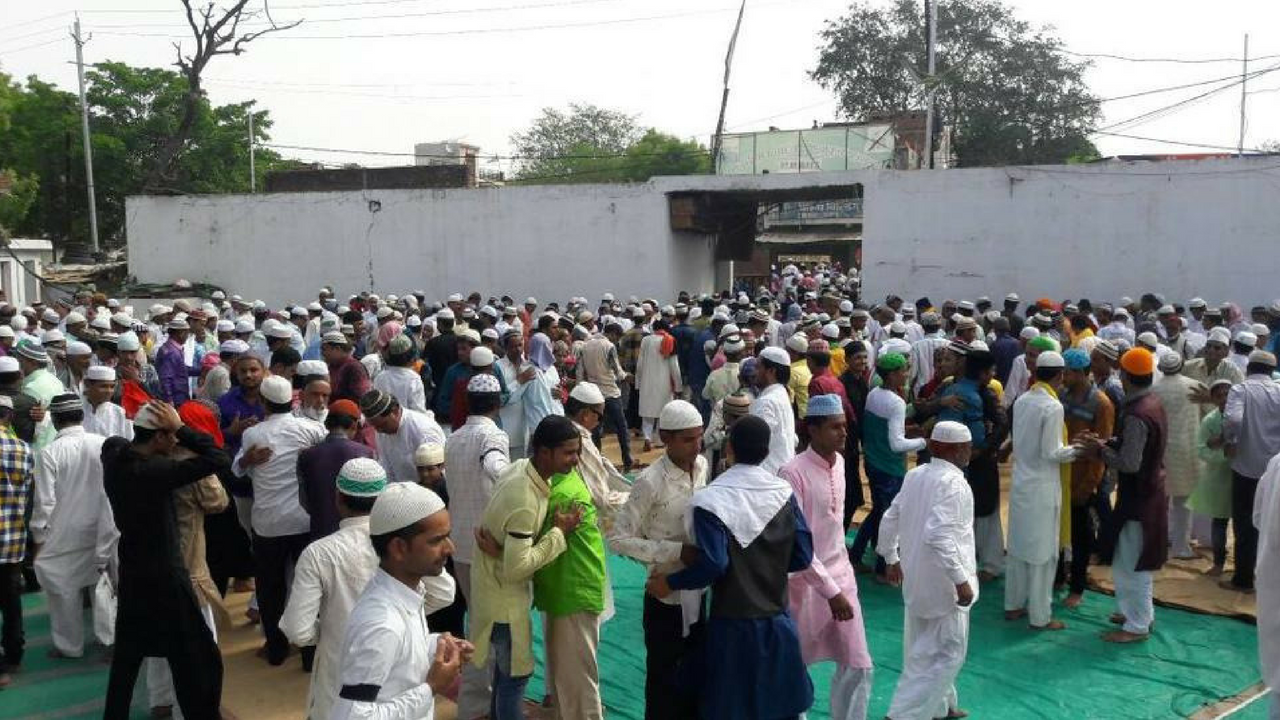
Muslims in India wear black bands to Eid prayers in protest of recent lynchings

26 June 2017516

Listen to this article

KJ narrates this report in his own voice

Muslims in India wear black bands to Eid prayers in protest of recent lynchings

Read original report on Hindustan Times or read a quick summary below;

  1. Muslims wore black arm bands in some parts of Madhya Pradesh’s Bundelkhand on Monday while offering Eid prayers at local mosques to protest against recent attacks on their community members.
  2. Nazir Khan, a teacher who came for prayers at the Eidgah in Bundelkhand, said mobs were targeting Muslim youth and murdering them without reason. “If they are guilty then action must be taken according to law which is a democratic thing. But not the way it is being done these days. We are protesting against this brutality in a peaceful and democratic manner”, he said.
  3. Abid Suleiman, president of Muslim Mahasabha Nowgawh, said frequent attacks on “our innocent Muslim youth without any proof of their involvement in any wrongdoing is bothering our community. Without police complaint, one sided action is being taken against them. Today we are wearing black bands to protest against government’s failure to check such incidents”.
  4. On Thursday, a 16-year-old Muslim boy was stabbed to death and his three brothers were injured on a Mathura-bound train. The prime suspect Ramesh was part of a mob that attacked the four brothers who were on their way back home to Haryana’s Ballabhgarh after Eid shopping at Sadar Bazar. In April, a Muslim dairy farmer was lynched in Rajasthan by alleged cow vigilantes.


 

#indian-muslims#muslim-lynchings-india#muslims-in-india

Related Intelligence

More articles
The Anwar Pivot: Why Malaysia is Neutralising the Indo-Pacific
South Asia

The Anwar Pivot: Why Malaysia is Neutralising the Indo-Pacific

Kuala Lumpur’s formal integration into BRICS represents a calculated structural shift. By diversifying its strategic dependencies, Malaysia is dismantling the Western assumption that Southeast Asia must choose between security and prosperity.

19 Sept 2026

The New Delhi Pendulum: Navigating the Bipolar Trap
South Asia

The New Delhi Pendulum: Navigating the Bipolar Trap

As Washington and Beijing harden their spheres of influence, India is refining a strategy of 'strategic autonomy'. By refusing to choose sides, New Delhi is leveraging its geography to become the world’s indispensable swing state.

14 Sept 2026

The Caracas-Delhi Bridge: India Ends the US Sanctions Paradigm
South Asia

The Caracas-Delhi Bridge: India Ends the US Sanctions Paradigm

New Delhi’s massive crude deals with Caracas signal more than just energy procurement. They mark the definitive collapse of the US oil embargo as a functional tool of Western statecraft in a multipolar energy market.

9 Sept 2026

The Durand Fracture: Why Islamabad and Kabul Have Reached a Dead End
South Asia

The Durand Fracture: Why Islamabad and Kabul Have Reached a Dead End

Pakistan’s decades-long pursuit of ‘strategic depth’ in Afghanistan has collapsed into a structural rivalry. Internal economic decay and shifting militant loyalties are now forcing a permanent divorce between former patrons and their proxies.

29 Aug 2026

The Anatolia-Indus Axis: A New Security Core Outside the West
South Asia

The Anatolia-Indus Axis: A New Security Core Outside the West

The formalisation of the Riyadh-Ankara-Islamabad defence triangle marks the collapse of post-1945 security norms. It is a strategic pivot driven by sovereign survival, technological parity, and the death of Western reliability.

20 Aug 2026

The Dhaka Disconnect: New Delhi’s Neighbourhood Policy Collapse
South Asia

The Dhaka Disconnect: New Delhi’s Neighbourhood Policy Collapse

India’s strategic reliance on a single political dynasty in Bangladesh has backfired. As Dhaka pivots toward Beijing and Islamabad, New Delhi faces a structural security dilemma that threatens its entire eastern flank.

18 Aug 2026