
Intelligence
America
107 reports in this category.

The Leviathan's Edge: Why America Still Monopolises the Future
While critics forecast a hollowed-out empire, the United States has widened its lead in the global technology race. The reason is not policy, but a unique synthesis of capital risk, institutional elasticity, and geographic isolation.
1 Mar 2026
Debt, Dominance, and the Weaponisation of the Dollar
The United States faces a mounting fiscal crisis, but the real threat to the dollar's hegemony is not solvency—it is the erosion of the trust required to underpin the world's primary neutral settlement tool.
1 Jan 2026

The Fractional Guard: Why the Petrodollar Survives by Shrinking
While headlines predict the dollar’s total demise, the true shift is far more subtle. We are entering a period of strategic fragmentation where the US dollar trades its monopoly for a more durable, albeit smaller, sphere of influence.
1 Sept 2025

The State Reborn: America’s Retreat from Globalisation
The United States has abandoned the neoliberal consensus in favour of a forceful industrial policy. This shift marks the end of an era, driven by the necessity of national security over the efficiency of the market.
1 May 2025

The Atlantic Drift: Why the Western Alliance is Structurally Fraying
The unity of the West is not being broken by external adversaries, but by the diverging economic incentives and security realities of its core members. Washington and Brussels are no longer following the same map.
1 Jan 2025

The Shale Fortress: Why Energy Independence Ended the American Empire
The American shale revolution did more than lower petrol prices; it destroyed the fundamental logic of the post-1945 global order. No longer tethered to Middle Eastern stability, Washington is now structurally incentivised to export chaos.
1 Sept 2024

The Invisible War: Why Washington and Beijing Deny the New Cold War
While policymakers in Washington and Beijing officially reject the 'Cold War' label, a structural confrontation over semiconductor supremacy and maritime chokepoints is already reshaping the global economy into two irreconcilable trade blocs.
1 May 2024

The Overstretch Trap: Can America Sustain a Three-Front Pivot?
As Washington attempts to manage simultaneous crises in Ukraine, the Levant, and the Taiwan Strait, the constraint is no longer just political will, but a structural deficit in industrial capacity and strategic focus.
1 Jan 2024
The Imperial Primary: Why the 2024 Vote is a Geopolitical Stress Test
Beyond the noise of domestic populism, the 2024 US election represents a structural referendum on the cost of empire. Washington must decide if it remains the world’s security guarantor or transitions into a transactional regional power.
1 Sept 2023

The Sovereign Snare: How Financial Force Undermines the Dollar
As Washington increasingly uses the US dollar as a tactical weapon, it risks eroding the strategic structural advantage that underpins its global primacy. Sanctions are effective in the short term, but they incentivise a permanent alternative architecture.
1 May 2023

Will the Taliban take over Afghanistan in the coming months?
6 Jul 2021

Iran plays chess, the US plays backgammon
9 Jan 2020

A self-inflicted wound: Trump surrenders the West’s “moral high ground”
14 Oct 2019
Trump’s Trade Wars: A New World Order?
23 Sept 2019
Saudi oil attacks put US commitments to the test
19 Sept 2019
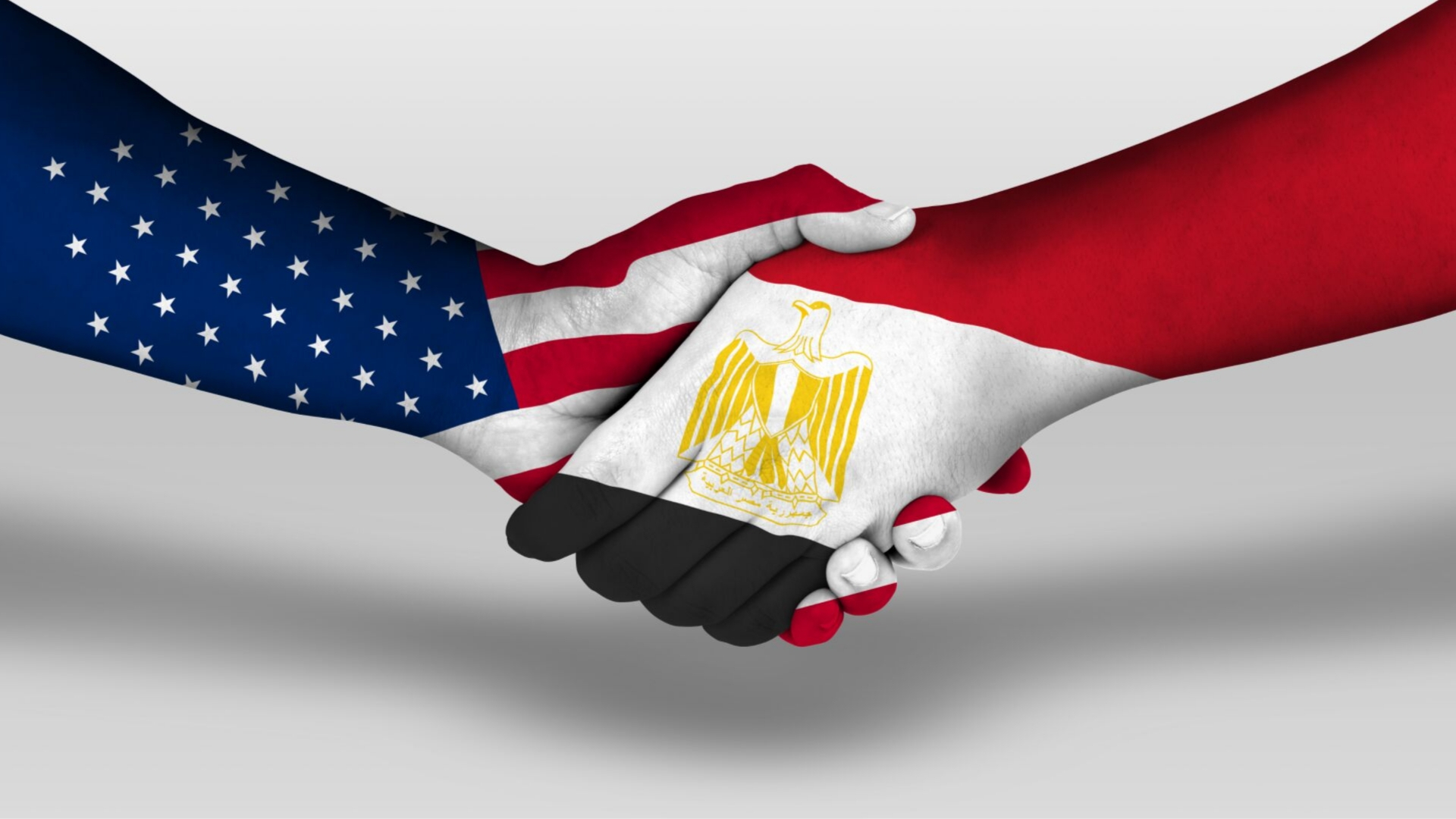
Could Detained American Hurt US-Egypt Relations: 5 Geopolitical Effects You Need to Know
1. US-Egypt economic cooperation strengthens Egypt and the US on Sunday signed four grant agreements for cooperation in the fields of higher education, science, technology, health, trade and investment, worth about US$60 million. Egyptian Minister of Investment and International Cooperation Sahar Nasr signed the agreements with the US Agency for International Development (USAID) Mission Director in Egypt, Sherry Carlin. This is a positive sign that Egypt and the US’s multi-sector relationship is growing and as healthy as ever. 2. Judicial cooperation signed last month In addition to the multi-sector growing economic cooperation between the US and Egypt, Egypt’s Public Prosecutor Nabil Sadek and United States Attorney General in the Donald Trump administration William Barr signed on Thursday a memorandum of understanding for judicial cooperation in Washington. The cooperation memorandum was signed based on “the desire of the two sides to work for the interest of justice and the establishment of the state of law,” a statement by the Egyptian side said. This is a positive sign of cooperation in an area around which there has been a lot of controversy. Subscribe to unlock the other 3 Points We wish we didn't have to do this, but only paid subscribers can read the full article, Unlike other publishers, we are not the beneficiaries of State funds and are entirely dependent on our supporters to keep KJ Vids functioning. Please subscribe to read the rest of the article. 3. Hope for a defence cooperation from Egypt 4. American detained in Egypt 5. America re-assured by Egypt-Israel gas deal By investing in KJ Vids, you are investing in yourself Our content succinctly contextualises the key geopolitical trends you need to know in order to make sense of world events. We can assure you that a regular dose of our content will be as healthy as fruit and vegetables for your mind. Subscribe for only £10 a month.
13 Aug 2019
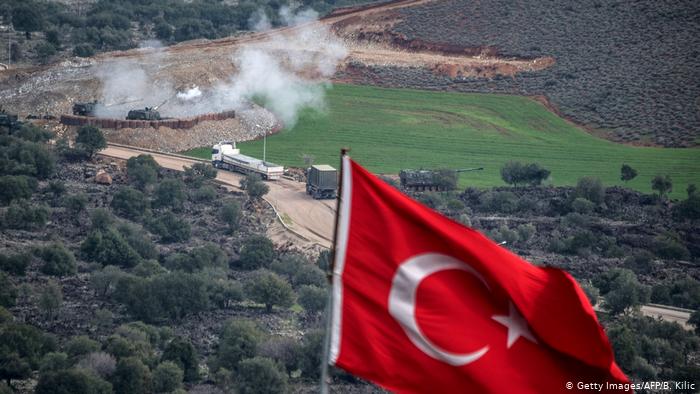
Will Turkey Invade Syria? 5 Geopolitical Points You Need to Know
1. The recent collapse of ceasefire: a bad sign The collapse of the ceasefire in Syria’s Idlib province has triggered “total panic” and threatened the lives of millions, according to the UN. A short truce declared by the Syrian regime this week in the country’s north-west was finished and fighting resumed immediately. The United Nations has raised a specific alarm about the risks of a massive government offensive in the area because Idlib has for several years served as a reception zone for those escaping government advances elsewhere in the country. This is a negative sign of the prospects of the Syrian civil war coming to an end, as the government seems persistence in its aggression, even through a ceasefire, and the rebels refuse to back down. 2. Turkey and Syria quarrel over Syria As Syria’s future remains unknown, Turkey and the US are engaged in a diplomatic fight for influence in the North of Syria. On Sunday, President Recep Tayyip Erdogan said Turkey, which already has a foothold in northwest Syria, will carry out a military operation in a Kurdish-controlled area east of the Euphrates in northern Syria against the US-backed Kurdish People’s Protection Units (YPG) that Ankara views as a terrorist group. The US has warned against this action and asked to step up talks for its prevention. However, if Erdogan insists and goes ahead with his plans, violence could ensue, which would cause a complete break of US-Turkey relations, as well as worsening the situation in Syria. Subscribe to unlock the other 3 Points We wish we didn't have to do this, but only paid subscribers can read the full article, Unlike other publishers, we are not the beneficiaries of State funds and are entirely dependent on our supporters to keep KJ Vids functioning. Please subscribe to read the rest of the article. 3. Isis reappearing in Syria 4. Fear of Turkish invasion 5. Ray of hope for Syrian refugees? By investing in KJ Vids, you are investing in yourself Our content succinctly contextualises the key geopolitical trends you need to know in order to make sense of world events. We can assure you that a regular dose of our content will be as healthy as fruit and vegetables for your mind. Subscribe for only £10 a month.
10 Aug 2019

US-France Trade War? 5 Geopolitical Effects You Need to Know
1. France to continue technology tax despite US threat France’s finance minister says that it will continue to carry out a plan to tax technology firms, despite a threat of tariffs on French goods from US President Donald Trump, according to Reuters. France’s senate had passed the controversial bill earlier this month, and it was signed into law by President Emmanuel Macron this week. The bill places a 3 percent tax on technology firms that earn more than €750 million ($834 million) in global revenue and €25 million in France, and would target the revenue that those companies earn in the country. That would affect nearly 30 companies around the world, not just firms from the United States. US president Trump responded by tweeting yesterday that the White House will “announce a substantial reciprocal action,” and that he could levy a tax against French wine, while The Office of the United States Trade Representative had also opened an investigation into the tax. Despite this France is showing no signs of stopping the tax, and is set to go ahead with it as planned. 2. France follows US in launching Space Force In another move that seems to challenge the US, months after President Donald Trump announced the creation of the U.S. Space Force, France is beginning to lay the groundwork for its own version. Macron announced last month that the nation’s air force will establish a space command for the purpose of national defense, particularly to protect French satellites. The French military currently operates a constellation of three Syracuse satellites that are primarily used for communication between the mainland and French troops deployed abroad. But after the new cameras are tried and tested, France will launch another generation of Syracuse satellites that will also be able to destroy enemy satellites. The upgraded Syracuse satellites will be armed with either submachine guns or lasers that could disable or even destroy another satellite, according to Le Point; France aims to have those space weapons fully operational in orbit by 2030. France’s minister of armed forces Florence Parly, said “We will conduct a reasoned arsenalization.” This is a sign that France is responding to the US’s own arsenalization, initiating a space rivalry, despite Parly denying an arms race in space. Subscribe to Unlock the other 3 Points We wish we didn't have to do this, but only paid subscribers can read the full article, Unlike other publishers, we do not rely on volunteers and pay all our analysts, editors and designers to produce quality content. 3. France could move towards Asia 4. Possibly a sign of Trump’s opposition to the EU 5. Cooperation on the strait of Hormuz continues By investing in KJ Vids, you are investing in yourself Our content succinctly contextualises the key geopolitical trends you need to know in order to make sense of world events. We can assure you that a regular dose of our content will be as healthy as fruit and vegetables for your mind. Try us out with a 14-day free trial.
3 Aug 2019